India
ProjectsOctober 22, 2025

A Shopify Hydrogen storefront on Oxygen and Sanity

A retail brand's storefront, built on Shopify Hydrogen. It serves more than 10,000 daily users across India. I worked on it with four other engineers and owned the architecture notes and the deploy pipeline. The client is not named here pending their sign-off. The codebase is around 110,000 lines across 96 routes. Product and commerce data comes from Shopify, and editorial content comes from Sanity, which means most pages assemble from two sources with different caching behaviour. The split between Shopify and Sanity is the thing that shapes this codebase. Shopify owns products, variants, inventory and the cart. Sanity owns everything the marketing team wants to change without a deploy: landing pages, editorial blocks, campaign content. A single product page pulls from both. They have different freshness requirements, because a price or a stock level going stale is a real problem and a piece of campaign copy going stale for a minute is not. Treating both as one cache tier makes the site either slower than it needs to be or wrong in ways that matter, so they are cached separately. I owned the Oxygen deploy pipeline. Oxygen runs storefronts at the edge, which is good for the customer and unforgiving about anything in the code that assumed a Node runtime. A significant part of setting the pipeline up was making that constraint fail early and locally rather than at deploy time. At ten thousand people a day, a bad deploy is not a quiet mistake, so the pipeline had to make the edge constraints fail on a developer's machine rather than in front of customers. Most of my time on this went into architecture notes rather than routes. With five people on one storefront, the routes are not the hard part. The hard part is that everyone needs the same answer to where data loading belongs, what is cached and for how long, and which of the two content sources owns a given piece of a page. Writing those down was cheaper than settling them repeatedly in review.

Related projects

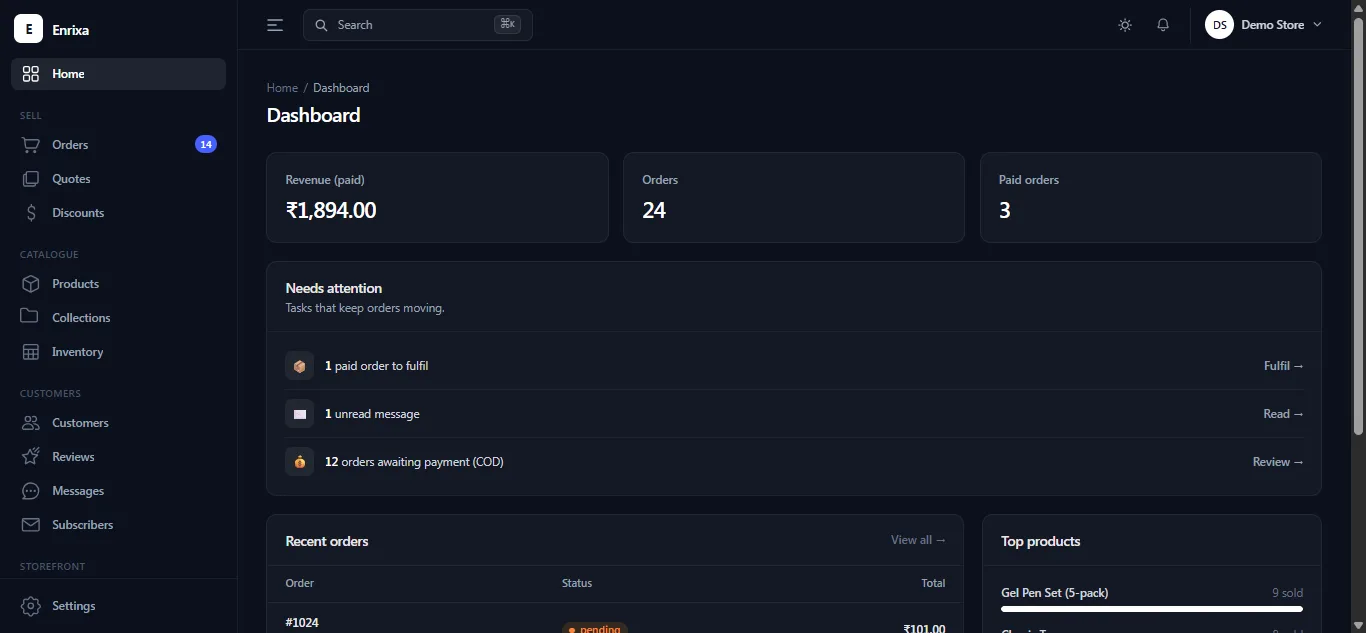
Enrixa Store, a multi-tenant e-commerce platform

Enrixa Store, a multi-tenant e-commerce platform

A platform where every merchant runs an isolated store on its own subdomain, and where a query that could leak one merchant's data into another fails CI instead of reaching customers.

Enrixa AI, a shopping assistant for Shopify

Enrixa AI, a shopping assistant for Shopify

A tool-calling agent that answers shopper questions against a live product catalog, streamed over SSE, with a chat widget that cannot collide with the store's own CSS.